In my article about the Tarsila exhibition, I wrote about how Dora cried when she learned that the Livraria Cultura bookstore at Conjunto Nacional had closed before she ever had the chance to visit.
I had told her about the afternoons I spent there when I was younger. For Dora, simply imagining an enormous place filled with books was enough to make her want to go. When I explained that it no longer existed, she thought it was unfair.
That article was about what I chose to pass on to her: a sense of familiarity with books, museums, films and places I had once needed to learn not to shy away from.
But there is another story inside that bookstore.
One that began long before Dora, and that may explain why her reaction moved me so deeply.
I used to spend my Sundays at Livraria Cultura in Conjunto Nacional.
I would arrive in the early afternoon and spend hours in the bookstore café. I brought my own book, settled in to read, then paused. I watched people browsing the shelves and tried to imagine the paths that had brought them there.
From the outside, I probably looked like a young woman who loved books and had found a quiet way to spend the weekend.
Inside, I felt like a fraud.
Not because I was pretending to enjoy reading. I loved it. I still do. What troubled me was the feeling that I couldn’t take those stories in the way everyone else seemed to.
I looked around and invented backgrounds for people I knew nothing about. I imagined homes full of books, parents discussing films over dinner, travel, better schools, cultural references shared since childhood. I believed those people had found their way there through paths more legitimate than mine.
I didn’t just envy what they knew.
I envied how naturally it seemedto belong to them.
That feeling stayed with me for years.
It was there throughout my teens, when I studied English with a determination that earned me the highest grades at my language school, term after term, even as the classes grew more demanding.
It was there when, at sixteen, I began teaching at the same language school I attended, marking homework between my own high school classes.
It was there on the weekends when I went alone to Avenida Paulista, watched independent films, went to theatres and bookstores, and deliberately sought out what other people had absorbed simply by growing up around it.
I didn’t yet have a name for that accumulated knowledge and experience.
I only knew that I wanted to get to know that world. I wanted to understand its references, join its conversations and recognise the names that seemed familiar to everyone except me.
For a long time, I took the effort it required as proof that I didn’t belong.
Now I see it differently.
I wasn’t pretending to be someone.I was becoming someone.
The cultural knowledge we inherit tends to feel natural because the learning disappears into everyday life. No one remembers exactly when they learned the names they always heard at home, absorbed the films they watched with their family or picked up the ways of speaking they had observed since childhood.
But when you have to build that knowledge for yourself, you can still see the seams. You remember every unfamiliar word, every place you entered alone, every moment when everyone seemed to know something no one had ever taught you.
Perhaps that is why what you have learned can feel like an imitation, while what others know seems inseparable from who they are.
When I was accepted into C&A’s management trainee programme, we were told that more than fifteen thousand people had applied for twenty-five places.
It was a real achievement. And yet part of me believed I had got there through a less legitimate route.
I used to say I had come in through the side door.
That wasn’t true. I had found the door on my own.
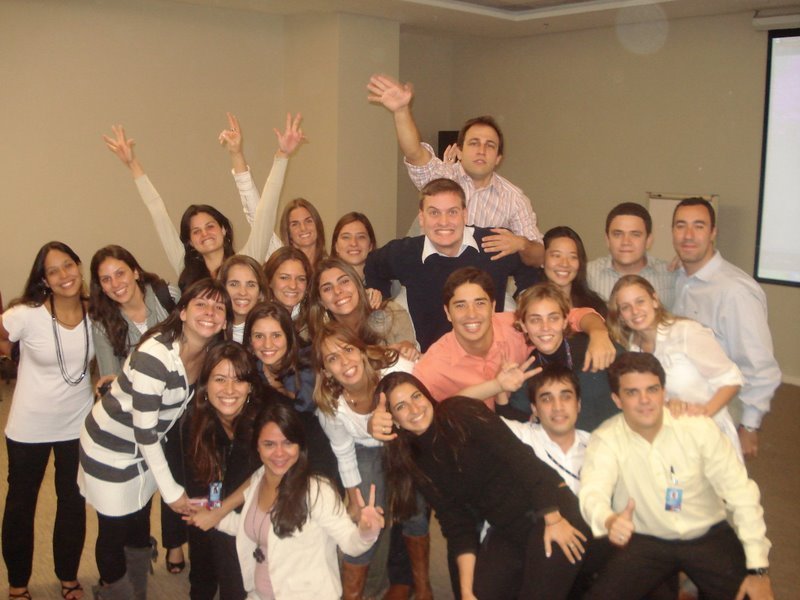
During the first few days of the programme, between presentations by company directors, training on commercial tools and development exercises, the HR team showed us two scenes from Good Will Hunting.
In the first, therapist Sean Maguire talks to Will Hunting on a park bench. Will is brilliant and knows the world through books. Sean confronts him with a distinction that intelligence alone cannot overcome: knowing about an experience is not the same as living it.
You can know every fact about a work of art without ever having stood before it. Read about war without having felt the fear of someone who was there. Know the documented facts of someone’s past and still know nothing about the life they carry within them.
That day, I didn’t understand why the scene affected me.
Twenty years later, I can put it into words.
No one looking at me in that room could have known what had happened before I got there.
They wouldn’t have known about the Sundays in the bookstore. The determination with which I studied English. The classes I began teaching at sixteen. The films, the theatres, the choices and the quiet work of building a familiarity that other people had acquired before they even knew it had value.
Where you come from is a fact.
But a single fact cannot tell the story of an entire life.
Not having inherited that cultural knowledge was also a fact. It explained part of my journey, but it did not define my ability. It said nothing about what I would do with what I lacked, or how far I would go to learn.
The second scene took place in Sean’s office.
Sean knew about the abuse Will had suffered. Standing before him, he began repeating a simple sentence.
It’s not your fault.
Will resisted. He tried to brush it off with sarcasm. Sean repeated it. He kept repeating it until the words broke through Will’s defences and reached a place he had spent his whole life protecting.
The film was about violence and abuse. It spoke of a pain far more tangible and brutal than my own. My tears did not mean our stories had to be equivalent.
But by the time the scenes ended, I was sobbing.
I got up, went to the bathroom and cried in a way I couldn’t explain.
I couldn’t explain it for twenty years.
Now I think those two scenes came together somewhere inside me, even though they spoke of different experiences.
The first told me that you cannot know a person solely through the facts you can see from the outside.
The second touched a guilt I hadn’t even known I was carrying: guilt about not having inherited certain knowledge and experiences, about having to learn later what seemed natural to everyone else, and about believing that the visible effort of my learning somehow made the result less real.
In 1978, psychologists Pauline Rose Clance and Suzanne Imes described the impostor phenomenon through the experiences of women with proven academic and professional achievements who, despite the evidence, continued to believe they were not truly capable and had fooled the people around them.
I knew that contradiction well.
I could earn the highest grade and feel it proved nothing. I could teach English and still believe I didn’t know enough. I could win one of twenty-five places in a selection process involving thousands of applicants and imagine that, sooner or later, someone would discover I wasn’t supposed to be there.
My achievements didn’t silence that voice because a lack of evidence had never been the problem.
The problem was how I decidedwhat counted as legitimate.
I was comparing everything that went on behind the scenes of my own effort with the ease other people showed on the surface. I could see every seam in what I had learned, and none in what they had learned.
The voice that called me a fraud hadn’t come from nowhere. It had grown out of that distance and the meaning I gave it as I tried to cross it.
It had a history.
That didn’t make it true.
What I would say today to the young trainee who got up from that room and went to cry in the bathroom would not be advice, a strategy or a plan for personal development.
I would simply say:
You’re fuckingincredible.
Not because you beat thousands of people in a selection process. Not because you learned English, started working young or spent your Sundays building the knowledge and experience you felt you lacked.
You’re fucking incredible because you did all of that without knowing exactly where it would lead. Because you recognised what was missing and, instead of accepting it as your fate, began to fill the gaps.
The young woman sitting in Livraria Cultura wasn’t playing a part.
She was learning.
She was finding her way in.
The knowledge and experience you built for yourself are not an inferior version of what other people inherited. They are no less authentic because you sought them out deliberately. No less yours because you remember how you acquired them.
You weren’t pretending to belong.
You were finding your own way through the door.
It’s not your fault.It never was.
References
- Pauline Rose Clance and Suzanne Imes, The Impostor Phenomenon in High Achieving Women: Dynamics and Therapeutic Intervention, Psychotherapy: Theory, Research & Practice, 1978.
- Good Will Hunting, directed by Gus Van Sant, Miramax, 1997. The official page includes information about the film and the “It’s Not Your Fault” clip.