Before me, there was a woman named Roza.
She was the eldest of eleven children, born to Italian immigrants who came to Brazil fleeing the war and found work in the coffee and sugarcane fields of rural São Paulo.
She carried a responsibility commonly placed on the eldest daughters of large, poor families: staying behind. While her siblings went to school, Roza remained in the fields with my great-grandmother.
She never learned to read. She never learned to write. She learned to work, because that was what there was to learn.
When she grew older, she began taking in laundry to help support the family. She lived in a wattle-and-daub house with an abusive husband and a silent illness in her body. Chagas disease, probably contracted because of the precarious conditions of rural life, remained with her for many years.
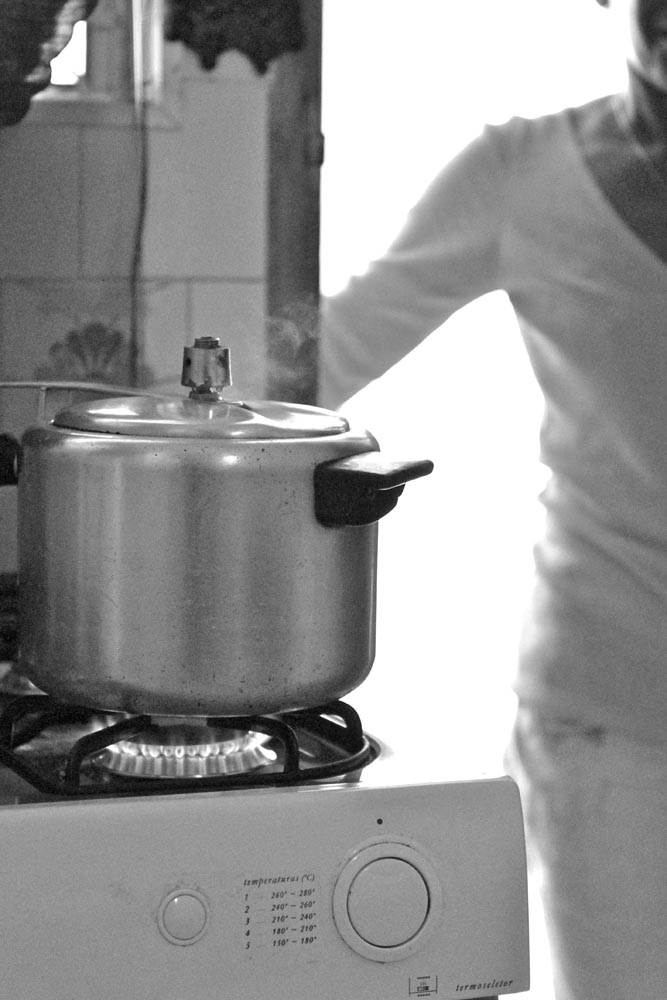
Roza knew how to cook.
She had an old pot in which she made a beef stew whose taste I can still remember decades later. It was the kind of food learned through years of making it on the same stove, with hands that knew when it was ready before the mind needed to think.
She did not have much. But whatever she had, she transformed.
That was how, without knowing it, she taught me that the body holds what life leaves undocumented.
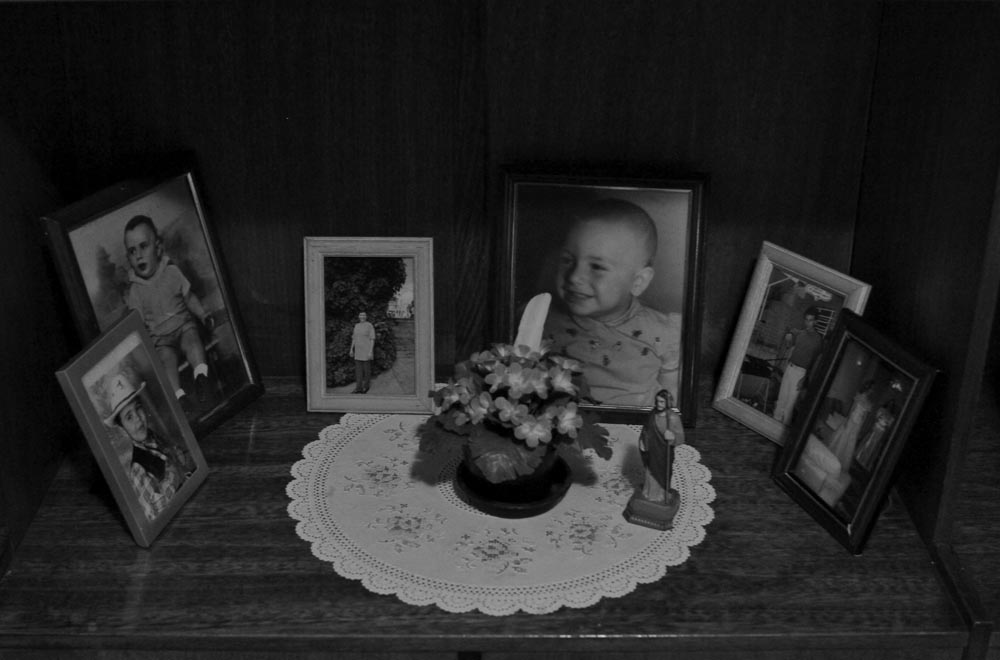
Years after Roza died, I returned to the house where she had lived to photograph what still remained. I called the series Roots. She was no longer there, but her presence was still inscribed in the objects, the rooms and the gestures of those who had stayed.
On my father's side, Grandpa Gildo drove a tractor on a farm in rural São Paulo. He too was the son of immigrants, and he too depended on working land that did not belong to him.
They were parallel stories, repeated across so many Brazilian families. People who arrived with very little and spent decades turning work into small steps forward, one generation after another, moving towards something they did not yet know how to name.
My parents met while working at Banco Bradesco in Cidade de Deus, Osasco.
For my father, it would become the job of a lifetime. He remained there for forty-five years, until retirement. After my sister was born, he decided to pursue a university degree at night. He worked during the day and studied after coming home, with the quiet discipline of someone who knew that every hour and every cent mattered.
My mother did not go to university. When she married, she left her job to care for the house and her daughters.
In my eyes, domestic life slowly erased parts of her that could find no room within that choice. I grew up sensing a quiet restlessness in her, as though the dreams she had put away were still searching for a way out.
By watching her, I understood, long before I knew how to explain it, that marriage would not be a life goal for me. I wanted to build an existence that did not require me to abandon who I was.
I think I inherited her dreams.
Perhaps I also inherited Roza's, including the ones she never recognized as dreams because there had been no room for her to have them.
I was born at the Cidade de Deus clinic in Osasco, on June 12.
Osasco in the 1980s was a working-class city on the outskirts of São Paulo, noisy and marked by violence. It was not a city that never stopped in any poetic sense. It never stopped because life demanded constant movement.
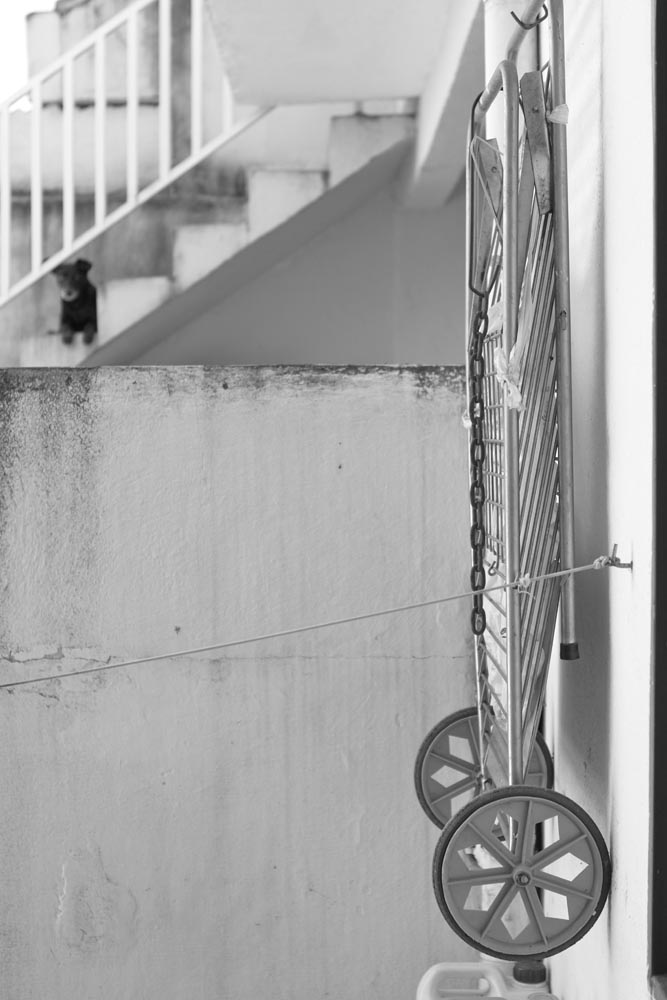
It was there that my parents built, with their own hands and Grandpa Gildo's help, the narrow semi-detached house where I grew up. Most of the construction happened on Saturdays, whenever time and money allowed.
The house had two bedrooms, one bathroom, a living room, a kitchen and a backyard as narrow as a corridor.
On summer Saturdays, my father tied the garden hose to the clothesline so my sister and I could cool off beneath it. In the kitchen, my mother prepared lunch while listening to Elvis Presley, her favourite singer. Loud music and carefully stored dreams made up a scene I would only understand many years later.
My father travelled to and from work on a company shuttle bus. For a while, he came home for lunch because it saved money and allowed him to see us in the middle of the day. When the company headquarters moved to Alphaville, he began eating in the staff cafeteria.
He never joined his colleagues for lunch at a restaurant. He would not allow himself that expense because a quiet mathematics governed every decision in our home.
It took me years to understand that this restraint was not a lack of ambition. It was a particular, disciplined form of love. The love of someone who knows what things cost and understands what can happen when the numbers do not add up.
Every car we owned was already more than ten years old when we bought it. A Beetle, a Belina, a Voyage. One after another. Having two used cars made more sense than having one new one, and our family needed two.
Every cent mattered.It always did.
My education began at a nursery school in a working-class neighbourhood of Osasco and took shape at Fundação Bradesco, where I studied from preschool through the final year of high school.
I learned typing and secretarial skills because my parents dreamed that I would become a bilingual secretary. It was an honest and generous dream, the best future they could imagine for me at the time.
I carried that plan for years, the way we carry dreams handed to us before discovering that we can also create our own.
We had a healthy childhood in the way that mattered most: we had the freedom to play.
Our street was residential and quiet. Once we were old enough, we began playing outside. Dodgeball, tag, hide-and-seek, climbing trees and jumping over walls.
I was never afraid to climb beyond where the others stopped.
When I think about it now, I cannot completely separate that girl from the woman I became. The impulse to discover what lay on the other side was already there. It did not come from someone pointing out a path. It was not born in a place that showed me every possibility.
It was an inner calling, present before I had the words to name it.
My grandmother Roza lived on the street behind ours. In front of her house grew a night-blooming jasmine.
I already carried the memory of Roza in my sense of taste. But there was another record of her stored within me: scent.
I cannot say how many times I ran past that plant. When we are children, we do not count the times. We live each one as though it were the only one.
What remained was that dense, sweet fragrance that emerged after sunset. It mingled with the warm air of Osasco's summer nights and entered my memory by a route that bypassed the mind.
The scent of hide-and-seek. Of other people's backyards. Of an entire childhood.
We rarely travelled during the school holidays. When we could, we usually went to a country hotel in Serra Negra with all meals included, so that no expense beyond what had been planned would be necessary.
We stayed for five days at most. Often, not even that long.
It was not good, but it was what we could manage.
Not because there was no desire for more, but because that desire did not yet know exactly what it wanted. It was simply an impulse with no destination. The longing of a girl who climbed trees and jumped over walls without knowing what she would find beyond them.
But there was something on the other side.I did not know what.I only knew that I wanted to get there.