I had booked the immersive Tarsila do Amaral exhibition for the afternoon. Since we would be arriving early on Avenida Paulista, I decided to have lunch with Dora at Gula Gula, next to Conjunto Nacional.
It was more than lunch before an exhibition.
We were sitting across from a place that had held so many afternoons of my youth.
I told her that when I was younger, I used to spend hours at Livraria Cultura. I would walk in with nowhere else to be, wander between the shelves, choose a book, sit down to read, put it back and look for another. Sometimes I would have coffee. On other days, I would watch a film nearby or simply observe the people passing through.
The bookstore was vast, beautiful and full of possibility. To the young woman I was, it felt less like a shop and more like a foreign territory I was trying to learn how to belong to.
Dora listened carefully.
When I finished, she said:
"I want to go to that bookstore, Mommy."
I felt a small, immediate sadness.
"Sweetheart, that bookstore doesn't exist anymore. It closed."
Dora began to cry.
It was not the brief cry of a frustrated child. She was sobbing, genuinely outraged, repeating that it was not fair, that she wanted to see the place I had just described, that such a wonderful bookstore could not simply have ceased to exist.
I tried to comfort her.
But she was already searching for a solution.
She said she would ask Uncle Felipe's mother, who is an architect, to design another bookstore. Then we would build a new one in exactly the same place.
The solution was impossible, but the logic made perfect sense.
If an important bookstore had disappeared, someone needed to rebuild it.
As Dora cried over a place she had never visited, I realized that I had passed a memory on to her with enough force for her to feel the loss too.
She was not crying only for a closed building.
She was crying for the possibility of a place where someone could spend hours surrounded by books, stories and people. For the idea that somewhere so beautiful could exist and still no longer be available when she was finally ready to enter.
To comfort her, I searched for an old photograph on my phone.
When Dora was three months old, her father and I travelled with her through Portugal and Italy. In Porto, we visited Livraria Lello. In one of the photographs from that trip, I am sitting inside the bookstore, breastfeeding her.
I showed her the picture.
I told her that even before she knew what a book was, she had already been inside a very special bookstore. That there are places our bodies experience before our memories are able to record them.
She liked seeing herself so small. She liked knowing that she had already crossed that space with me.
But she remained upset about Livraria Cultura.
Livraria Lello could not replace my bookstore.
We finished lunch and made our way to the exhibition.
I take Dora to exhibitions, plays, bookstores, cinemas and on trips whenever I can. I do it even when it requires a significant investment from me, because I do not see these experiences as mere entertainment.
They are part of the legacy I have chosen to leave her.
I am not interested in giving her a childhood decorated with cultural outings, as though tickets, photographs and journeys could become a collection capable of proving something about us. What I want is more profound.
I want Dora to grow up knowing that these places belong to her too.
I want her to walk into a museum without feeling that she must already know every work of art. To hear unfamiliar music and stay. To sit before a painting without immediately searching for the correct answer. To open a book without assuming that some stories were written for people more cultured, more prepared or more entitled to them than she is.
I want curiosity to be one of the languages of her childhood.
For me, it was not.
For many years, I built my cultural fluency deliberately, almost by force. I spent afternoons in bookstores, cinemas and theatres trying to reach a world that drew me in, but whose entrance no one had shown me.
I had not grown up surrounded by those references. I had to seek them out one by one, without knowing exactly which ones mattered or where I should begin.
Much of what other people had learned through exposure, I tried to learn through observation.
Livraria Cultura was one of the places where I did that.
Perhaps that is why I described it to Dora with so much emotion. I was not talking only about a bookstore. I was talking about one of the places where I began building the person I wanted to become.
At the exhibition, we walked together through Tarsila's colours, forms and landscapes.
In the third room, mirrors and images were projected all around us. We lay on the floor and stayed there for several minutes, watching everything move above and beside us.
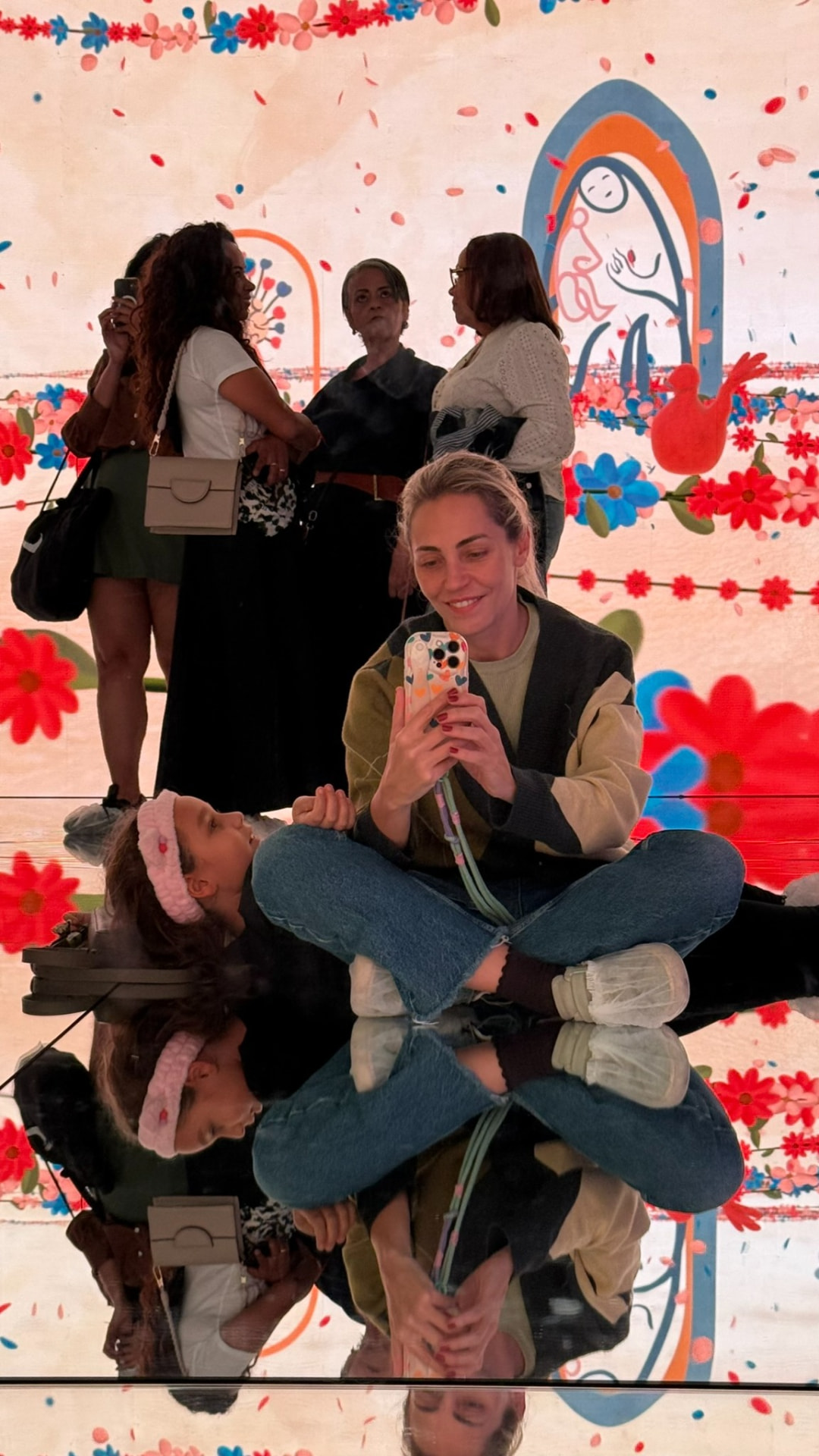
Dora listened to the music.
"It makes me feel so peaceful, Mommy," she said.
I watched her lying on that floor, allowing the artwork to reach her without asking who Tarsila was, which movement she belonged to or what meaning she was supposed to find.
She simply felt it.
In that moment, every investment made sense.
Cultural fluency is not simply the accumulation of information. It is developing enough familiarity to remain present when faced with something we do not yet understand. It is resisting the urge to retreat when a work of art, a conversation or an environment presents us with a new language.
Knowledge often begins before explanation.
It begins when someone discovers that they are allowed to stay.
We continued through the exhibition until I came across a photograph of Tarsila with her daughter, Dulce.
I stopped in front of it.
I knew we belonged to entirely different times, backgrounds and histories. There was no equivalence between our paths, nor was that what the photograph suggested to me.
What I recognized was a gesture.
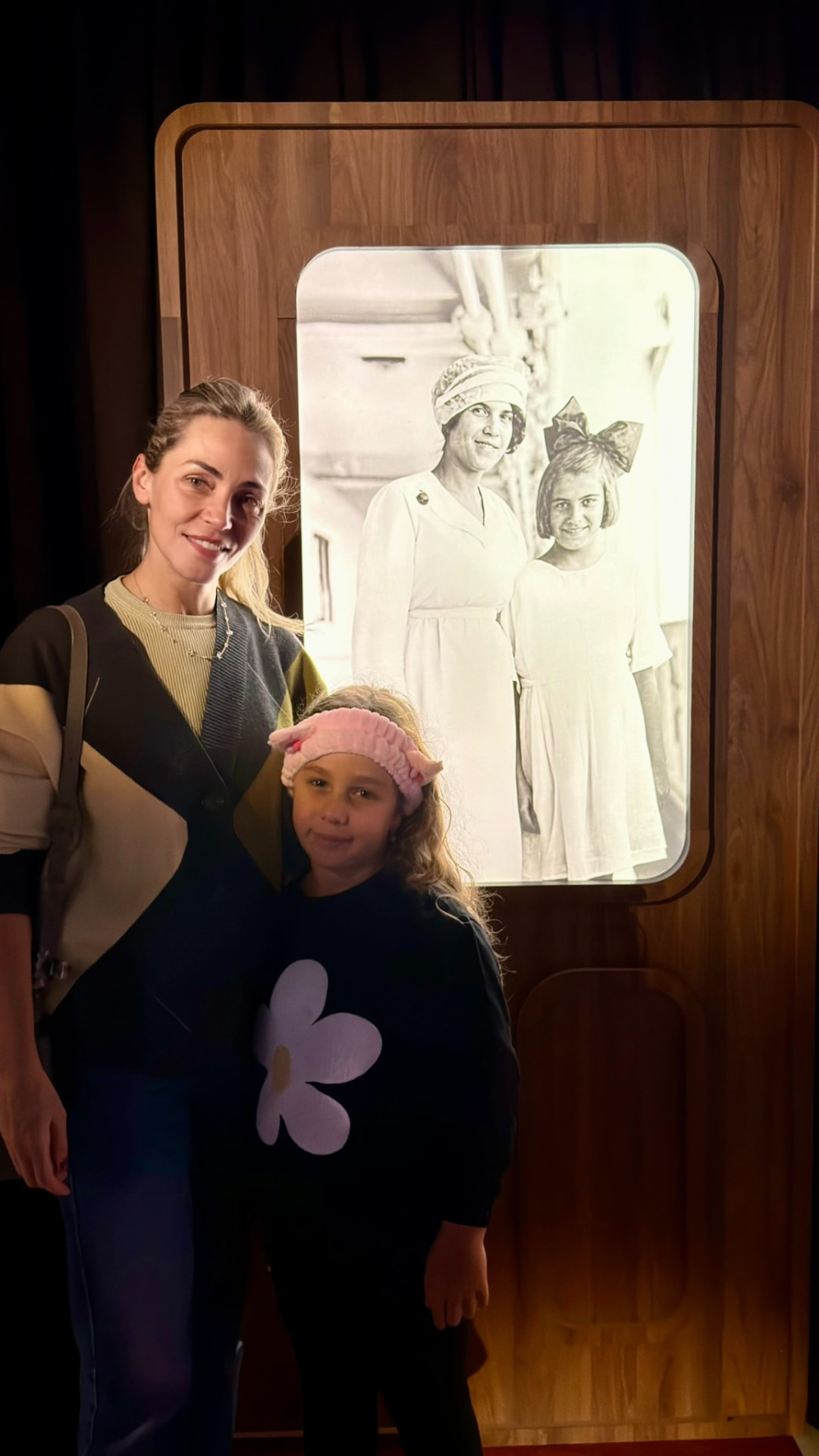
In different times, for different reasons and with different resources, there were women trying to expand the world available to their daughters.
Women who understood that raising a girl can also mean introducing her to other cultures, other ways of living, other ways of thinking and other possible paths.
Perhaps no mother can completely free her daughter from the barriers she will encounter.
Some will be visible. Others will be hidden within environments, relationships, seemingly simple words and the knowledge everyone treats as natural because they never had to learn it consciously.
But we can offer cultural fluency.
We can give words to what once felt only unfamiliar. We can show that other places, other people and other ways of building a life exist. We can teach a girl to recognize a door before anyone tries to convince her that the entrance was not made for her.
I do not want Dora to live a corrected version of my life.
She will have her own absences, her own conflicts and boundaries I cannot yet foresee. No childhood can prepare someone for everything.
What I can do is reduce the number of worlds that will seem forbidden to her simply because they are unfamiliar.
I want what came to me as a late discovery to be part of her everyday language.
Not so that she will appear sophisticated.
Not so that she will know how to quote artists, books or cities.
But so that when she enters a new environment, she will not mistake unfamiliarity for inability. So that she will not look around and imagine that everyone else was born knowing something she alone failed to learn.
So that she knows cultural fluency can be acquired.
And that it can also be passed down as an inheritance.
As we left the exhibition, I kept thinking about the photograph of Tarsila and Dulce. I thought about my mother, my grandmother Roza and everything each generation had or had not been able to give the next.
I have a photograph from 2007 in which that continuity seems to fit entirely inside a kitchen.
In it are my grandmother Roza, my mother, my sister and me, together with Juan, Roza's first great-grandchild. Four generations gathered in an ordinary domestic scene, before any of us knew everything that would be passed on, interrupted or transformed from one life to the next.
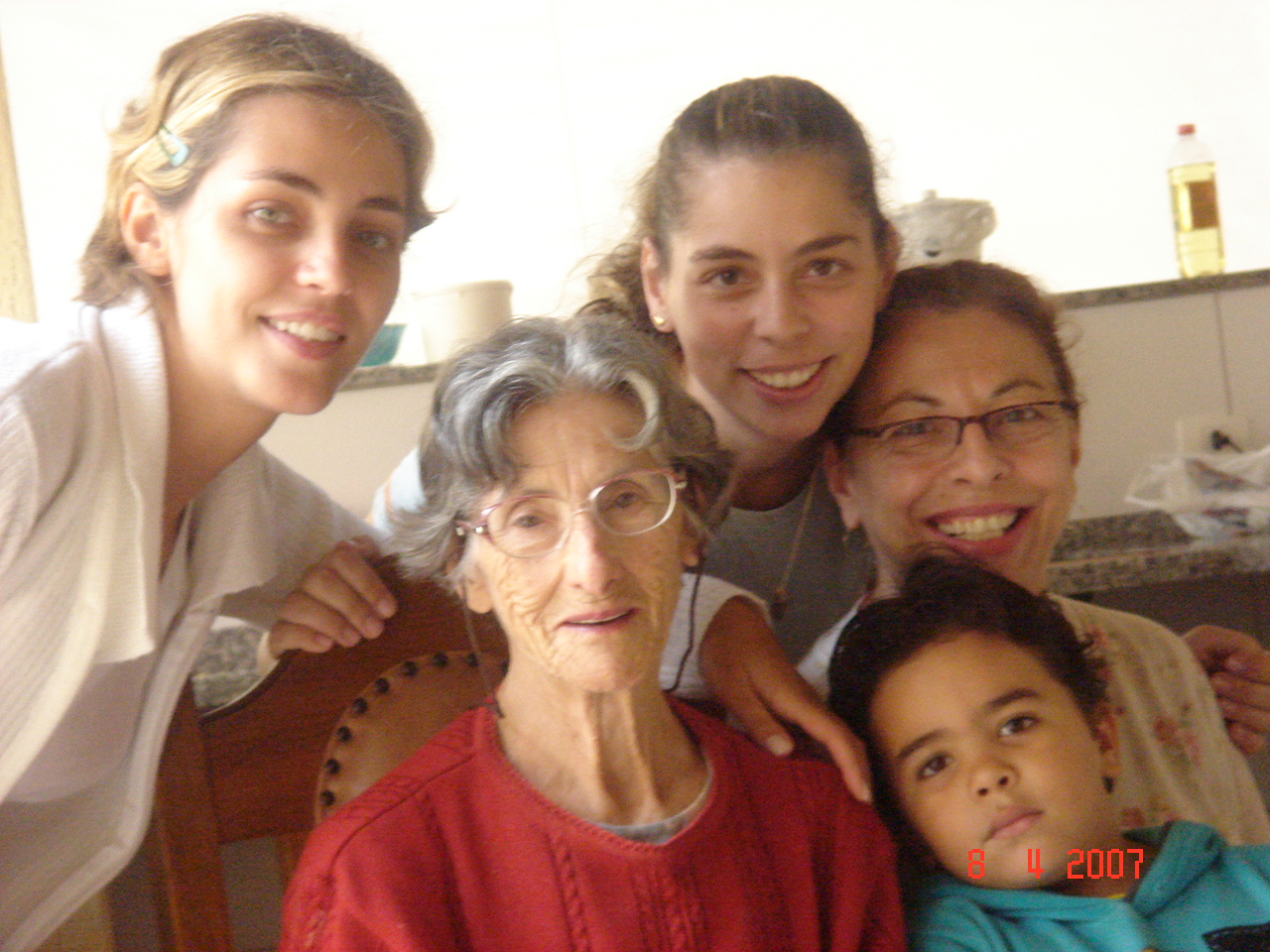
My grandmother never learned how to read.
My mother set aside dreams she was never able to live.
I spent part of my youth trying to build, on my own, the cultural fluency I had not inherited.
Now I walk through exhibitions holding my daughter's hand.
Not because our story has been resolved, but because it continues.
Perhaps that is the legacy I am trying to leave Dora.
Not the guarantee that every door will remain open. Some bookstores close. Some places disappear before we can introduce them to the people we love.
But I want to leave her with the certainty that knowledge, art and curiosity belong to her too.
I want her to enter.
I want her to know how to stay.
And when a door closes, I want her to have enough imagination to ask someone to build another.
The cultural fluency one generation had to build can become the language of childhood for the next.